
What is Anglicanism?
A Historic and Global Church
The Anglican way is a Christ-centered and historic approach to living out the way of Jesus in the 21st Century. The rich history goes back all the way to the early church and her ways and rhythms of worship. We hold a lot in common with other orthodox and evangelical traditions that seek to make Jesus known, loved and glorified in our cities, homes and personal lives.
The Anglican church was born out of the Protestant Reformation in England during the 16th Century. As the early English reformers found a deeply Reformational conviction about God’s word, the desire to have worship in the English language and the bible into the hands of the everyday man and woman drove the hearts of the reformers to impact and become the largest protestant church in the world. As British Christians, compelled by the Word of God and the Holy Spirit, took their faith around the world, churches were established on every continent and in many nations. These British pastors and missionaries encouraged autonomy and collegiality with the daughter churches that would later separate into the “provinces” of the Anglican Church. Today, this communion of churches now consists of 38 self-governing provinces around the world, in 164 countries, with tens of millions of members.
Have more questions?
Shoot us a question and we are more than happy to explain more on our Anglican heritage and our particular church’s practice and belief. Text, call or email using the contact information at the bottom of the page or simply come and participate in worship of Jesus as king with us!
-
In a short answer… Yes! The Anglican church finds its roots and history in the Protestant Reformation. However, that does not mean there are not streams in the Anglican church that find themselves in practice and theology closer to a Roman Catholic church or even a charismatic church.
Here at Christ the King, we find ourselves most aligned with what is called the “Three-Stream” movement. This movement acknowledges that in the history of the church God has moved in the liturgical and sacramental churches, the evangelical churches and the spirit-filled churches. In our local church we fully embrace these three streams in our expression of faith and worship. If that sounds too good to be true… we would agree!
-
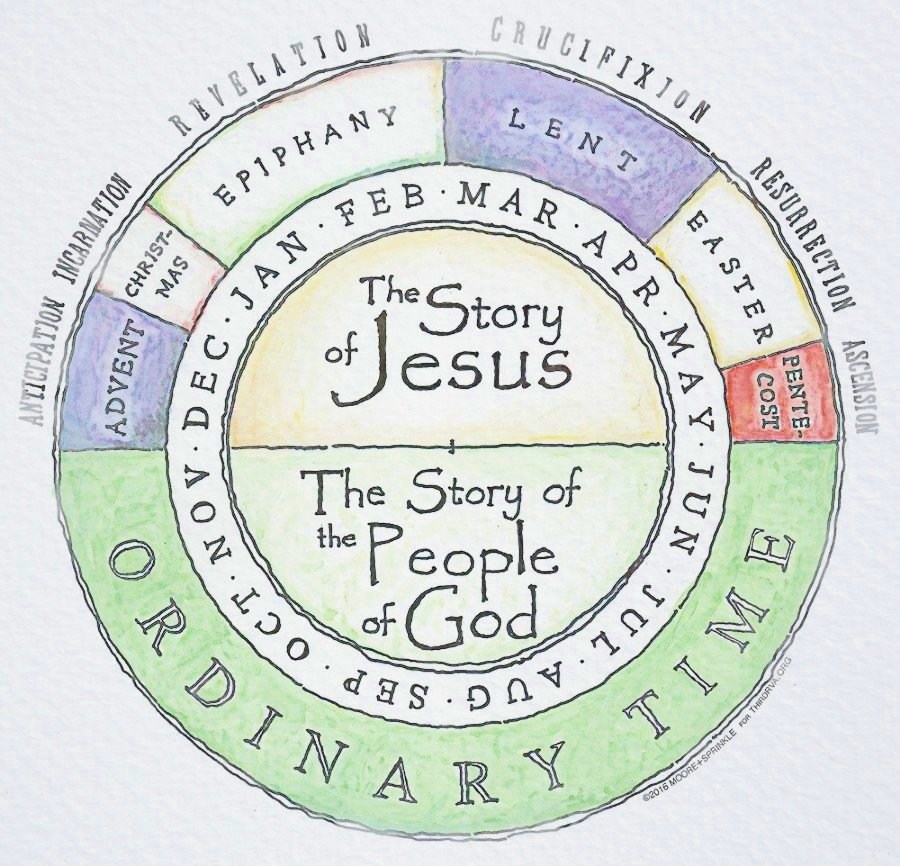
Maybe what most distinguishes the Anglican way is by its worship. Anglican worship is centered on the active participation of hearing and responding to God’s Word through worship, prayer, confession and fellowship with Christ in Holy Communion. Worship at Christ the King is biblically-based and shaped by the Book of Common Prayer and the Church Year (a calendar based upon the life of Christ). The Liturgical Calendar is divided into six major seasons: Advent (Christ’s Coming), Christmas (Christ’s birth), Epiphany (Christ for the whole world), Lent (a time for reflection, repentance and grace in preparation for Easter), Easter (Christ’s resurrection from the dead) and Pentecost (the coming of the Holy Spirit and the birth of Christ’s Church on earth) followed by “normal time” (growing together as the body of Christ and His witnesses in the world). As one can see, the entire year is centered on the person and work of Jesus!
-
Unfortunately, in many minds, the word liturgy has bad connotations. But “liturgy” comes from the Greek word leitourgia, which simply means the ‘work’ of the ‘people’. It is what marked the early church in their worship as it adapted from the 1st century Jewish worship practices.
Anglican Liturgy is marked by 4 movements in its worship. Gathering, Word, Table and Sending. We gather as a people to be a unified worshiping community with prepared hearts to meet with the Lord. We listen to His word in the readings of scripture, creeds and sermon. We respond to God’s grace as the gospel was shared and come to the table to have fellowship with the risen Jesus as one people. After all this, we are sent into the world empowered by the Spirit to do that which He calls His church to do.
In its expression Anglican worship and liturgy is balance of traditional and more informal liturgy can be helpful to facilitate worship for a variety of different people. Here is why: a steady liturgy transcends the ever-changing realities in our daily lives, and so we can count on it to bring us back to things that are true and constant. Also, Anglican liturgy teaches us how to pray scripture, what to read in God’s word and what to believe as it flows in the rhythms of corporate prayer, daily readings of God’s word and the faith summed up in the creeds. As we participate in these liturgical rhythms, we are connected with millions of other Christians (from all over the world and throughout time) who have are saying and have said the same prayers to the same God.
-
Worship—The Scriptures encourages us to, “Sing to the Lord a new song,” and to “Let every instrument be tuned for praise.” At Christ the King, you will notice a variety of music styles that represent the different people in the worship service. You will experience beautiful historic hymns, contemporary worship and passionate expressions of each type.
Readings of Scripture—We believe that what we need today is not less Bible but more! We allow God to speak to us in the readings of scripture to allow God’s word to get in us. You will hear read from the front portions of the Old Testament, New Testament, the Psalms and a Gospel reading. A full diet of God’s word!
The Creeds—are statements of faith written by the early Church and recited by the people during the service after the hearing of the Word. We recite the Creeds to recommit our lives to Christ and be reminded of what we believe. The Creeds proclaim succinctly to all what followers of Jesus believe. The Creeds also keep the Church accountable to the gospel and in line what the historic faith passed down. We do not want novelty but rootedness in timeless truth.
The Prayers of the People—We respond to God and His Word by relating to Him in and through prayer. In prayer, we listen to the Lord, give thanks, present our petitions and requests and pray both corporately and individually. At Christ the King we pray silently and aloud during the Prayers, unifying ourselves to one another before the throne of God.
The Confession of Sin—is placed after the hearing of God’s Word as an opportunity to respond to the gospel of Jesus Christ. We are given the opportunity to individually and corporately acknowledge and repent of our sins and to confess our need for Jesus. This is our way of bringing ourselves to the foot of the cross in a regular way. The leader then proclaims the gospel and its wonderful comforts: that by grace through faith in Jesus Christ complete forgiveness abundantly given to those whose trust is in Jesus.
The Peace—The purpose of passing of the peace is to remind each other of the peace of Christ given because of the gospel and to allow members of the church who have been at odds with one another to “make peace in Christ” before they come to the communion table.
The Holy Communion—Jesus gave the command for his people to break bread and drink wine not only as a memorial of his death and resurrection, but as an invitation to have fellowship with Christ through faith. Anglicans believe in the “real presence of Christ” not only in the bread and wine, but among the church gathered for Communion. Thus, the whole communion service is called a “sacrifice of praise and thanksgiving.” Taking communion is not just an individual encounter but a corporate experience of Christ’s presence among His people. All those who have trusted in Jesus Christ as their Lord and Savior and who are “in love and charity with their neighbor” are welcome at the Lord’s Table for communion. As we say often, “it is not an Anglican table but the Christian table”.
The bread is placed on an open palm and may be eaten followed by drinking from the common cup or may be dipped into the cup of wine. If you do not wish to receive communion, you are welcome to come forward and cross your arms across your chest as a sign to request a prayer and blessing or to remain seated for reflection and prayer.
-
We think that the modern and yet ancient expression in liturgy has the power to speak to all despite one’s denominational (or lack there of) background. While our beliefs are Biblical, orthodox and reflect the theology of the Protestant Reformation, Anglicans retain some liturgies along with helpful traditions from the early Church that Roman Catholics would find familiar. So no matter your background, we try to make the whole worship understandable to participative for all!
-
For more on Anglicanism, check out these great resources:
Reformation Anglicanism: A Vision for Today’s Global Communion (online)
The Thirty-Nine Articles of Faith (online)
The Book of Common Prayer (online)
The Creeds (Apostolic, Nicene, Athanasian) (online)
The Book of Common Prayer and Its Relevance Today by John Yates (audio)
Our Anglican Heritage by John Howe
Principles of Theology: An Introduction to the 39 Articles by W.H. Griffith Thomas
The Creeds
Creeds are statements of our basic beliefs about God. The term comes from the Latin credo, meaning I believe. The Church has two foundational creeds: the Apostles’ Creed and the Nicene Creed. These have been the foundational statements of faith for Christians worldwide since the fourth century. In reciting and affirming these creeds, we join Christians across the world and throughout the ages in affirming our faith in the one God who created us, redeemed us, and sanctifies us.
Our major theological positions and foundational beliefs are found in the creeds. We engage in discussion on secondary theological issues, but we do not let them define our church.

Three-Stream
Evangelical
When we say that we are “evangelical” we mean that we take seriously God’s command to speak about and live like Jesus. We preach and teach from the Bible because we believe it is the inspired word of God and hold its words as sacred and relevant for all ages and cultures, and our desire is for all people to enter into a saving relationship with Jesus.
Charismatic
When we say that we are “charismatic” we mean that we believe God is present and active among His people. We anticipate the work of the Holy Spirit in the life of the church for the conviction of sin, the illumination of truth, and the restoration of all things.
Liturgical
When we say that we are “liturgical” we mean that we value the longevity of historic tradition, the rhythms of the church calendar, the consistency of a lectionary-based teaching plan, and our connection to the global Church.
Word and Table
We believe that a Sunday gathering finds its full culmination in the presence of both Word and Table. The Bible is declared through the reading of the Psalms and other passages and expounded upon in the pastor’s sermon. Then the Lord’s Supper is taken by those who profess faith in Jesus as a weekly remembrance and community celebration of the hope we’ve found in His sacrificial death to pay for our sins and the sins of the world. We believe that Jesus, risen and very much alive and active, extends grace and presence to His people through this sacrament He gave to the church.
The Word and the Table are the two central pillars of a Sunday gathering.
The Church Calendar Year
We use the historical church calendar to inform our worship and the yearly rhythms of church life.
Half of the year is spent learning through and meditating on the life of Jesus, and the other half is spent exploring the story of the church, both biblically through the epistles as well as series apt for the current needs of the church at that time.